







Which Plastic Surgery Is Most Effective at Each Life Stage
Which plastic surgery is most effective at each life stage depends on how the body naturally changes over time, not just age alone. Plastic surgery is no longer a one-size-fits-all decision, because timing plays a major role in how natural and lasting results look. Each decade brings different changes in skin elasticity, fat distribution, and facial structure, which means the most effective procedures also shift with age. When treatment is matched correctly to these changes, results tend to look more balanced and age more gracefully. A personalized approach is central to this philosophy at Lucia Clinic Dubai, where we focus on planning procedures based on anatomy, lifestyle, and long-term goals rather than short-term trends.
Plastic Surgery in Your 20s: Refinement, Not Restoration
Plastic surgery in your 20s is primarily about refinement rather than reversing signs of aging. At this stage, the face and body are still in their structural prime, with strong collagen production, good skin elasticity, and minimal volume loss. Because of this, surgical goals usually focus on proportion, symmetry, and correcting features that have been a long-standing concern rather than addressing age-related changes.
One of the most common procedures in this decade is a nose job in Dubai. It is typically performed after facial growth is complete, usually around ages 18–21, once nasal and facial bone development has stabilized. The goal is often to improve facial balance rather than create dramatic change, making subtle adjustments more important than aggressive reshaping.
- Otoplasty is another frequently performed procedure in younger patients. It is used to correct prominent or asymmetrical ears and can have a significant impact on confidence, especially when performed early in adulthood.
- Breast augmentation is commonly chosen in the 20s for patients who want to enhance naturally small breasts or correct asymmetry.
- Breast reduction is often performed when breast size causes physical discomfort, such as back, neck, or shoulder pain. In many cases, it is not purely cosmetic but also functional, improving posture, mobility, and overall quality of life. Early intervention can also prevent long-term strain on the spine and connective tissues.
- Liposuction is also effective in this decade because skin retracts well after fat removal, leading to smooth contouring when performed on suitable candidates.
- For men, gynecomastia surgery for men addresses excess chest tissue and improves chest shape.
Procedures to avoid in this decade include facelifts and heavy filler use, since there is no meaningful volume loss to correct. Trend-driven changes should also be avoided, as facial preferences often shift with age.

In your twenties, plastic surgery is a refinement.
Plastic Surgery in Your 30s: Prevention Meets Enhancement
Plastic surgery in your 30s sits between refinement and early correction. This is the decade when the first visible signs of aging begin to appear, but they are still subtle and often highly responsive to minimally invasive or moderate surgical approaches. Skin remains relatively elastic, healing is strong, and results tend to integrate well when procedures are chosen appropriately.
Early structural changes typically include mild midface volume loss, the beginning of fine lines around the eyes and mouth, and slight softening of facial definition. These changes are gradual but noticeable in comparison to the sharper contours of the 20s. In addition, many individuals experience lifestyle-related body changes such as weight fluctuations, pregnancy, or breastfeeding, which can affect the abdomen, breasts, and skin tone.
Research on facial fat structure shows that volume loss does not happen evenly. Certain areas, such as the cheeks and under-eye region, tend to show earlier changes, which is why subtle hollowing or flattening often becomes visible in the 30s before more general sagging develops.
One of the most common procedure groups in this stage is post-pregnancy body restoration. This can include a tummy tuck, breast lift, and liposuction, often combined in a single surgical plan.
- Breast lift surgery is frequently performed after pregnancy or weight fluctuations to restore natural positioning and firmness.
- Eyelid surgery Dubai procedure can help address early eyelid heaviness or hooding, which may begin even before deeper facial aging appears.
- Liposuction combined with skin-tightening technologies is also effective, since skin still adapts well to contour changes.
- Fat grafting/body contouring is sometimes used for subtle volume restoration in areas like the cheeks or under-eyes.
Non-surgical treatments such as Botox, skin boosters, and ultrasound-based tightening are often introduced in this decade to delay more invasive procedures later.
Plastic Surgery in Your 40s: The Peak Decade for Transformation
Plastic surgery in your 40s is often considered the most impactful stage for visible yet natural-looking change. This is the period when aging signs become more established, but the skin and underlying tissues still respond well to surgical repositioning and contour restoration. As a result, procedures done in this decade can produce great, long-lasting improvements when carefully planned.
Mini facelift or deep-plane facelift procedures become more relevant in this decade, particularly mini facelifts or deep-plane techniques that reposition deeper facial structures rather than simply tightening skin. Eyelid surgery for both upper and lower lids is common, as it addresses hooding and under-eye bags simultaneously. Neck contouring procedures, including neck lift or targeted fat removal under the chin, are frequently performed alongside facial surgery.
For the body, tummy tuck surgery with muscle repair is widely chosen after pregnancy or weight changes. Arm and thigh lifts may also be considered when skin laxity becomes more noticeable. Breast procedures often involve a combined lift and augmentation for better shape restoration. Brazilian Butt Lift (BBL) can also be effective in selected patients with good skin elasticity and adequate fat availability.
This decade is often referred to as a strong intervention window because results are significant while healing capacity remains good.
Plastic Surgery in Your 50s: Comprehensive Rejuvenation
Plastic surgery in your 50s usually shifts from targeted corrections to broader rejuvenation strategies. This is the stage where facial aging becomes more structural and less responsive to isolated procedures, so treatment plans often address multiple areas at the same time for balanced results.
By this decade, skin laxity is more pronounced due to continued collagen decline and hormonal changes associated with menopause. The face typically shows deeper jowls, more visible neck bands, and clearer separation between facial compartments. Volume loss in the midface and temples becomes more evident, which can contribute to a more tired or hollow appearance even when overall health is good.
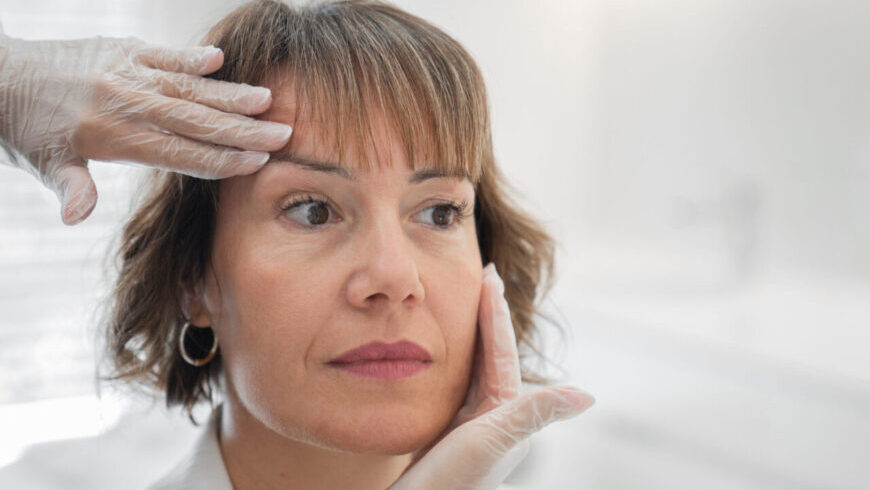
Later in life, plastic surgeries bring comprehensive results.
On the body, post-menopausal fat redistribution is common, often concentrating around the abdomen and flanks, while skin quality becomes thinner and less elastic. The breast tissue may also change in shape and position, sometimes requiring revision of earlier procedures or combined lifting techniques.
- A deep-plane facelift combined with a neck lift is often used to reposition underlying structures for longer-lasting and natural results.
- Upper and lower eyelid surgery with fat repositioning helps restore a more rested appearance around the eyes.
- Brow lift procedures can address forehead heaviness and improve upper face balance.
- Facial fat grafting is frequently used to restore lost volume in the cheeks and temples.
- Breast surgery in this decade may involve lifting, implant replacement, or correction of age-related changes in previous implants.
- Abdominal surgery often includes a full tummy tuck with muscle repair, particularly in patients with weakened abdominal walls.
- Some patients also consider labiaplasty after hormonal changes affect tissue comfort or appearance.
At this stage, combination procedures are common because they create balanced results across multiple areas rather than focusing on one region alone.
Plastic Surgery in Your 60s and Beyond: Safety-First Refinement
Plastic surgery in your 60s and beyond is primarily focused on refinement, comfort, and maintaining a natural appearance rather than creating dramatic change. At this stage, treatment planning becomes more conservative, with a stronger emphasis on safety, recovery capacity, and overall health status.
Skin elasticity is significantly reduced, and bone structure changes become more noticeable. Healing also takes longer, and medical conditions may influence surgical planning.
- Facelift revision or secondary facelift procedures are sometimes performed for patients who had earlier surgery and now require maintenance correction.
- Neck lift surgery is often done as a standalone procedure when neck aging is more prominent than facial changes.
- Eyelid surgery remains one of the most effective procedures at any age, improving vision and appearance when excess skin is present.
- A brow lift can reduce forehead heaviness and improve facial openness.
- Fat grafting is used to restore volume loss caused by bone resorption, particularly in the midface.
In this age group, medical clearance and anesthesia safety are key priorities. Procedures are often shorter or staged to reduce stress on the body. The primary goal is not transformation, but restoring a rested, balanced appearance that aligns with natural aging. Surgeon experience with older patients becomes especially important, as technique selection and safety management directly influence outcomes.
Cross-Age Procedures That Work at Any Life Stage
Some procedures remain effective regardless of age because they address structural or functional concerns rather than age-related changes. These treatments can be effective in the 20s through the 60s and beyond, depending on individual anatomy and goals. Rhinoplasty is one of the most consistent examples. It can be performed once facial growth is complete and remains relevant across adulthood.
Scar revision surgery is another age-independent option. It is used to improve the appearance of scars caused by injury, previous surgery, or skin conditions such as acne. Reconstructive procedures also fall into this category. These may follow trauma, illness, or previous surgical complications, and are focused on restoring function and symmetry rather than addressing aging.
For men, gynecomastia surgery remains relevant at any adult age. Excess glandular or fatty tissue in the chest can persist from adolescence or develop later in life due to hormonal changes, weight fluctuations, or medication use.
Overall, these procedures are defined by need rather than timing. Their effectiveness depends on anatomical conditions and surgical planning, not the patient’s life stage.
How Lucia Clinic Personalizes Plastic Surgery by Age
Personalized planning is essential in modern plastic surgery because aging changes do not occur at the same pace for everyone. Skin quality, bone structure, lifestyle, hormonal status, and previous procedures all influence what will work best at a given stage of life.
Lucia Clinic Dubai uses a multi-specialist team that includes surgeons such as Dr. Alessandro Caielli, Dr. Mario Russo, Dr. Tony Yang-Soo Park, Dr. Sanjay Parashar, and Dr. Raj Kanodia. Each brings experience in facial, body, and reconstructive procedures across different age groups. Consultations focus on skin quality, facial structure, hormonal stage, and lifestyle factors rather than applying a standard plan to all patients.
3D imaging helps patients understand likely outcomes before surgery, supporting more realistic expectations. Lucia Clinic also integrates surgical and non-surgical treatments, allowing patients to delay or enhance results over time instead of relying on a single intervention.
Overall, the focus is on long-term aesthetic planning rather than reactive decision-making. Instead of treating each concern in isolation, the goal is to create a structured plan that evolves with the patient’s natural aging process.
Aligning Surgery With Natural Age-Related Changes
The most effective plastic surgery at each life stage depends on how the body naturally changes over time, not just age alone. Procedures in your 20s focus on refinement, while your 30s and 40s introduce preventive and corrective options. Later decades shift toward restoration and safety-focused rejuvenation. When procedures are matched correctly to anatomy and timing, results tend to look more natural and last longer. A personalized consultation remains the most reliable way to determine the right approach, especially when considering how different treatments can be combined across life stages for balanced, long-term outcomes.