






Understanding the Difference Between Aesthetic Investment and Aesthetic Maintenance
Every aesthetic decision falls somewhere between two ideas: a one-time change that lasts for years, and a regular treatment that keeps your face and skin at their best. Understanding aesthetic investment and aesthetic maintenance helps you budget realistically, set the right expectations, and avoid paying repeatedly for something a single procedure could solve, or the reverse. At Lucia Clinic Dubai, many of our first consultations start with this exact question, so it helps to know where each treatment sits before you plan your next step.
What Is an Aesthetic Investment?
An aesthetic investment is a treatment that creates a structural, long-lasting change. Surgery is the clearest example. A facelift repositions deeper tissues, a blepharoplasty removes excess eyelid skin, and a rhinoplasty reshapes cartilage and bone. These results age with you, but they do not wear off in a few months.
Investments usually cost more at once and involve recovery time. Their value comes from how long the result lasts and from the fact that no injectable can do the same job. In our experience, patients who choose an investment at the right moment often spend less on top-ups over the following years.
Why This Distinction Matters in Dubai
Dubai offers access to almost every aesthetic treatment, often within minutes of home or work. That convenience makes it easy to book treatments one at a time without a long-term plan. Over several years, small sessions can add up to a large investment of their own.
Thinking in terms of investment and maintenance brings order to those choices. It also helps you compare clinics and offers on the right basis, rather than on the price of a single session.
What Is Aesthetic Maintenance?
Aesthetic maintenance covers treatments that work for a defined period and then need repeating. Botox relaxes muscles for a few months. Fillers restore volume until the body slowly breaks them down. Skin boosters, peels, and laser sessions keep skin quality high, but only while you continue them.

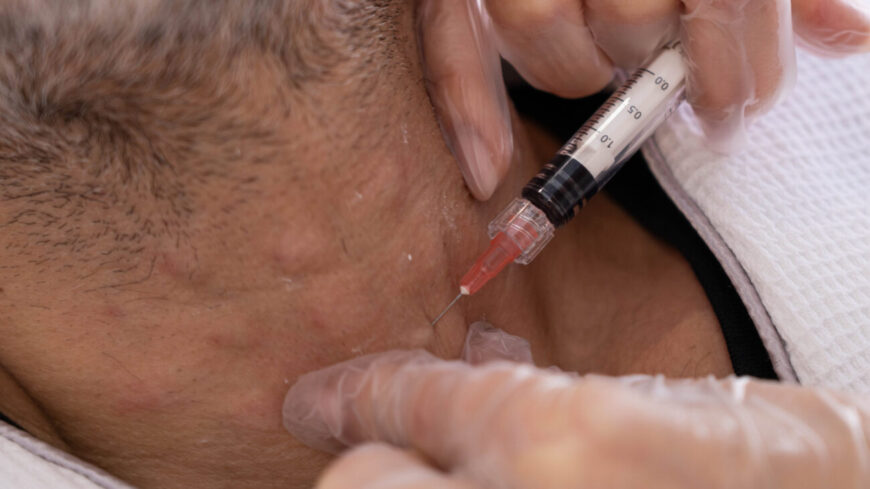
Botox is a classic maintenance treatment, repeated every few months.
Maintenance is not a weaker option. It is the right tool for dynamic wrinkles, mild volume loss, and skin quality, which surgery does not address. The question is whether you are using maintenance for a concern it can actually solve.
How Lifestyle Affects Both Categories
Your habits influence how long both investments and maintenance treatments last. Sun exposure, smoking, poor sleep, and large weight changes all speed up skin aging and shorten results. In Dubai, daily sun protection makes one of the biggest differences.
Healthy habits stretch the interval between maintenance sessions and help surgical results look fresh for longer. We often see that patients who protect their skin consistently need fewer top-ups over the years, which makes every treatment better value.
How the Two Compare at a Glance
The simplest way to see the difference is to compare how each type behaves over time:
- Investment: higher one-time cost, planned downtime, results measured in years.
- Maintenance: lower cost per session, little or no downtime, results measured in months.
- Investment changes structure, such as skin excess, tissue position, or shape.
- Maintenance manages movement, volume, hydration, and texture.
Neither column is “better.” Most balanced long-term plans include one or two investments and a steady maintenance rhythm around them.
Where Eyelid Surgery Fits as an Investment
Heavy upper eyelids are one of the clearest examples of a concern that maintenance cannot solve. Botox can lift the brow slightly, but it cannot remove skin that folds onto the lashes. Many patients try this route for years before asking about surgery.
Blepharoplasty in Dubai removes that excess skin through incisions hidden in the natural crease. The result typically lasts many years, and patients often find they need less maintenance around the eyes afterward. In our consultations, this is one of the procedures patients most often say they wish they had done sooner.
How Long Do Maintenance Treatments Last?
Botox typically lasts around three to four months, although some patients see shorter or longer results. Hyaluronic acid fillers usually last from six months to well over a year, depending on the product and the area. Areas that move a lot, such as the lips, tend to need more frequent top-ups than the cheeks.
Skin quality treatments follow their own schedule. Profhilo is usually done as an initial course and then repeated a few times a year. At Lucia Clinic, we write these intervals into your plan, so you know in advance what a year of maintenance actually involves.
Signs That Maintenance Has Reached Its Limit
A pattern we see often is a patient who started with fillers in her thirties and kept adding volume as her face changed. Over time, the filler was compensating for sagging rather than volume loss. The result looked heavier, not younger, and each session delivered less improvement.
Common signs that maintenance is no longer the right tool include:
- Needing more product every visit for the same effect
- Heaviness in the midface or jowls after fillers
- Upper eyelid skin resting on the lashes
- Loose neck skin that injectables cannot lift
- Top-ups needed more often than the product should require
When several of these appear together, it is usually time to discuss a structural option.
When Is Surgery the Smarter Aesthetic Investment?
Surgery becomes the smarter choice when the concern is excess skin or tissue that has descended. A facelift in Dubai addresses jowls and neck laxity in a way that no amount of filler can. Eyelid surgery removes skin rather than trying to disguise it.
Patients sometimes delay surgery because it feels like a bigger decision. Yet years of compensating with injectables can cost as much as a single operation, without delivering the same result. Our surgeons will tell you honestly when you are still a good candidate for non-surgical care.
Where Botox Fits as Maintenance
Botox is the clearest example of maintenance done well. It treats expression lines on the forehead, between the brows, and around the eyes by relaxing the muscles that create them. Used regularly, Botox treatment can also slow the deepening of these lines over time.
Its effect is temporary by design. That is an advantage for first-time patients, because the result is adjustable and reversible. Most of our regular Botox patients settle into two to four sessions a year.
Where Fillers Fit as Maintenance
Fillers restore lost volume and define features such as the lips, cheeks, chin, and jawline. Dermal fillers work well when volume loss is the main issue and the skin still has good support.
They become less effective when the real problem is skin laxity. Filler adds volume; it does not tighten. In our practice, we often reduce filler use in patients who move toward surgery, so the final result looks natural rather than overfilled.
Why Regenerative Treatments Count as Maintenance
Regenerative treatments improve skin quality from within. They support collagen, hydration, and elasticity, but the effect fades if you stop. This places them firmly in the maintenance category, even though their results build more slowly than fillers.
Polynucleotides are a good example of this approach. They are usually given as a course, followed by occasional top-ups. We often recommend them to patients who want healthier skin without changing their features.
Non-Surgical Treatments That Bridge Both Categories
Some treatments sit between investment and maintenance. Energy-based skin tightening stimulates collagen, and its results last longer than injectables but less long than surgery. Thermage FLX is a good example, often repeated about once a year.

Skin laxity is often the sign that a structural investment is due.
These options suit patients with early laxity who are not ready for surgery. They also help protect results after a facelift. Think of them as maintenance with a longer interval, rather than a replacement for surgery.
Why the Order of Treatments Matters
The order in which you combine investment and maintenance changes the final result. Fillers placed before a facelift may need to be adjusted afterward. Laser treatments are usually scheduled once surgical healing is complete.
Planning the sequence in advance avoids paying twice for the same correction. At Lucia Clinic, we map the order of treatments in one plan rather than booking them one at a time.
How to Budget for Both Over Five Years
A useful exercise is to plan over five years instead of one visit. Add up the yearly cost of your current maintenance routine and multiply it by five. Then compare it with the cost of a structural procedure plus a lighter maintenance plan afterward.
This comparison often surprises patients. A well-timed investment can reduce how much maintenance you need, while maintenance alone keeps costs recurring. Prices vary by treatment and plan, so our team prepares a personalized estimate during your consultation.
What Maintenance Looks Like After Surgery
Surgery does not end the need for care. After a facelift, the skin continues to age, and expression lines still form. Maintenance simply becomes lighter and more targeted.
Most of our surgical patients return to a simple routine within a few months. This often includes Botox for expression lines, skin boosters for hydration, and strict sun protection. Good maintenance helps a surgical result look fresh for longer.
Why Skin Quality Is Always Maintenance
Even the best surgery does not change skin texture, pigmentation, or hydration. Those depend on daily care, sun protection, and regular in-clinic treatments. Dubai’s strong sun and dry indoor air make this especially important for our patients.
Our guide on why long-term skin quality matters explains why consistency beats intensity. Good skin makes every investment look better and last longer.
How a Consultation Helps You Decide
The right balance depends on your anatomy, age, skin, and goals, not on a fixed formula. At Lucia Clinic, we start with a detailed assessment that can include the 3D skin analysis camera. It shows pigmentation, texture, and wrinkle depth that are hard to judge in a mirror.
From there, our doctors separate concerns into what needs structural change and what needs ongoing care. According to the American Society of Plastic Surgeons, Botox generally lasts three to four months, which is why we map maintenance intervals before treatment starts. You leave with a clear plan and timeline instead of a list of unrelated treatments.
How Men Approach Investment and Maintenance
Men often prefer fewer appointments and longer-lasting results. Many start with a single structural change, such as eyelid surgery, and keep maintenance minimal. Others prefer a light routine of Botox and skin treatments with no downtime.
Both approaches can work well when they match the concern. A pattern we see often is a male patient who wants to look less tired at work. For him, the right answer depends on whether the tiredness comes from skin, volume, or heavy eyelids.
Common Mistakes Patients Make
The most common mistake is using maintenance to delay an inevitable investment for too long. The second is the opposite: choosing surgery for a concern that a few injectable sessions could manage. Both lead to frustration and wasted budget.
Another frequent error is chasing trends instead of following a plan. Treatments chosen one at a time rarely add up to a coherent result. A plan that combines both approaches, in the right order, avoids this.
Creating a Long-Term Plan That Ages With You
Your needs will change every decade. In your thirties, maintenance usually does most of the work. In your forties and fifties, one or two investments may reset the foundation, followed by lighter maintenance.
This is why we review plans regularly rather than once. A good aesthetic plan adapts as your face and goals change, so each step builds on the last.
When to Review Your Aesthetic Plan
A plan made at 35 rarely fits perfectly at 45. We recommend reviewing your plan every one to two years, or sooner after major life changes such as pregnancy or significant weight loss.
Regular reviews prevent over-treatment and help you move money from maintenance to investment, or the reverse, at the right time.
Planning Your Aesthetic Investment and Aesthetic Maintenance
Knowing the difference between aesthetic investment and aesthetic maintenance lets you spend wisely and get results that look natural for years. Surgery changes structure once, while injectables and skin treatments keep movement, volume, and quality in balance. The best outcomes come from combining both at the right time. If you want a plan that shows what to invest in now and what to maintain, book a consultation at Lucia Clinic Dubai and build a long-term roadmap with our doctors.