







How to Sleep After Different Plastic Surgery Procedures

Sleep is one of the most overlooked factors in plastic surgery recovery. While most patients focus on medications, compression garments, and follow-up appointments, proper sleep positioning can play a major role in reducing swelling, protecting incisions, and supporting the healing process. Understanding how to sleep after different plastic surgery procedures is important because the wrong sleeping position can increase pressure on surgical areas, prolong bruising, worsen swelling, and even affect final results. The ideal sleep setup varies depending on the procedure, whether you have undergone facial surgery, breast surgery, body contouring, or a combination of treatments. At Lucia Clinic Dubai, our team provides detailed recovery instructions tailored to each procedure to help patients heal safely and comfortably.
Why Sleep Position Matters After Plastic Surgery
Sleep is when your body performs much of its repair work. During deep sleep, blood flow increases to healing tissues, inflammation is regulated, and the immune system works to support recovery.
After a plastic surgery Dubai procedure, proper sleep positioning becomes especially important because it helps:
- Reduce swelling
- Improve circulation
- Support lymphatic drainage
- Protect incision sites
- Minimize discomfort
- Prevent unnecessary pressure on treated areas
Incorrect positioning can lead to prolonged swelling, increased bruising, irritation of incision lines, and additional stress on healing tissues.
Clinical research shows that sleep deprivation significantly slows skin barrier repair in humans, which means that poor sleep can directly delay wound healing.
Because each procedure affects different areas of the body, sleep recommendations vary. Following your surgeon’s guidance helps protect results and supports a smoother recovery process.
General Sleep Tips That Apply to Every Procedure
While recovery instructions vary, understanding how to sleep after different plastic surgery procedures starts with a few universal principles that apply to nearly every patient.
- Keep the treated area elevated whenever possible. Elevation supports circulation and helps reduce swelling and bruising. Wedge pillows or recliners are often useful in the early recovery phase.
- Avoid stomach sleeping during the initial healing period. This position can place direct pressure on incision sites and increase discomfort.
- Use pillows for support and stability. Placing pillows around your body helps keep you in a safe position and reduces the chance of rolling during sleep.
- Maintain a calm sleep environment. A cool, dark, and quiet room helps improve sleep quality and supports deeper rest, which is important for tissue repair.
- Stay properly hydrated during the day. Good hydration supports healing, but try to reduce fluid intake right before bed to avoid nighttime interruptions.
- Limit alcohol, caffeine, and screen time before sleep. These can disrupt sleep cycles and reduce the quality of rest your body needs for recovery.
These habits create a strong foundation for recovery, no matter which plastic surgery procedure you have undergone.
How to Sleep After Facelift Surgery
After a facelift, sleeping on your back with your head elevated approximately 30 to 45 degrees is recommended.
Elevation helps minimize swelling while preventing unnecessary pressure on the face. Many patients find wedge pillows or recliners helpful during the first stages of recovery.
Key recommendations include:
- Sleep on your back only
- Keep your head elevated
- Use a travel pillow to prevent rolling
- Avoid pressure on the cheeks and jawline
- Keep the neck and head aligned
Sleeping with the head turned to one side may place tension on incision lines and increase swelling.
Most patients are advised to maintain elevated sleeping positions for at least two weeks following facelift surgery Dubai procedures.
How to Sleep After Rhinoplasty
Rhinoplasty patients should sleep on their backs with their heads elevated to reduce swelling and protect the nose.
Because the nasal structures are healing and reshaping during recovery, any pressure on the nose can affect comfort and potentially interfere with results.
Helpful strategies include:
- Sleeping in a recliner
- Using multiple pillows for elevation
- Avoiding side sleeping
- Keeping pets and children away from the face during sleep
Elevation can also reduce bruising around the eyes by helping fluid drain more efficiently.
Most surgeons recommend avoiding side sleeping for several weeks and waiting until healing progresses before returning to normal sleeping positions after the rhinoplasty Dubai procedure.
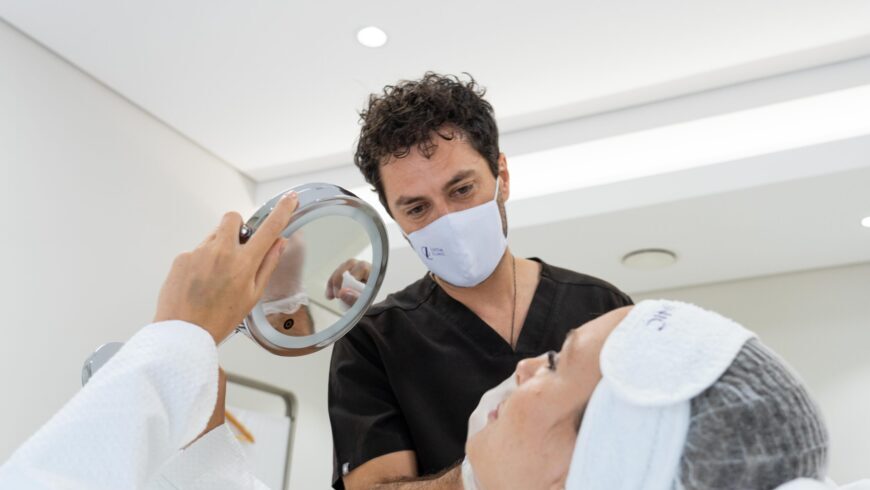
Sleeping position after a surgery depends on the type of the procedure.
How to Sleep After Blepharoplasty
Following eyelid surgery, back sleeping with the head elevated remains the safest option.
Elevation helps reduce swelling around the delicate eye tissues and minimizes fluid accumulation during the night.
Patients should:
- Sleep with the head elevated 30 to 45 degrees
- Avoid rubbing the eyes
- Use prescribed eye protection if recommended
- Apply cold compresses before bedtime if approved
Side sleeping may increase swelling on one side of the face and should generally be avoided during early recovery.
Most patients maintain elevated sleep positions for one to two weeks after eyelid surgery Dubai procedure.
How to Sleep After Tummy Tuck Surgery
Recovery from a tummy tuck Dubai procedure requires one of the most specialized sleeping positions in plastic surgery.
Patients are typically instructed to sleep in a slightly bent “beach chair” position, with the upper body elevated and knees supported.
This position helps:
- Reduce tension on the incision
- Protect muscle repair
- Improve comfort
- Minimize pulling sensations
A typical setup includes:
- Several pillows behind the back
- Pillows beneath the knees
- A recliner chair if available
Sleeping completely flat can place excessive tension on healing tissues and should be avoided during the first stages of recovery.
Most patients avoid stomach and side sleeping for four to six weeks following a tummy tuck.
How to Sleep After Liposuction
Sleep positioning after liposuction depends largely on the area that was treated.
Abdominal Liposuction
Patients typically sleep with:
- Slight upper-body elevation
- Knee support
- Compression garments in place
Thigh and Hip Liposuction
Back sleeping is generally preferred to avoid direct pressure on treated areas.
Arm Liposuction
Arm elevation may help reduce swelling during early recovery.
Regardless of treatment area, compression garments should usually remain on during sleep according to your surgeon’s instructions.
Avoid stomach sleeping until swelling and tenderness significantly improve.
How to Sleep After Breast Augmentation, Lift, or Reduction
Breast surgery patients should sleep on their backs with their upper bodies elevated approximately 30 to 45 degrees.
This position reduces swelling while preventing pressure on healing breast tissues.
Recommended practices include:
- Wearing the surgical bra continuously
- Sleeping elevated
- Using pillows on both sides of the body
- Avoiding side sleeping
- Avoiding stomach sleeping
Patients often find that body pillows create a protective barrier that prevents accidental rolling during sleep.
Most surgeons recommend avoiding side and stomach sleeping for four to six weeks following breast augmentation, breast lift, or breast reduction procedures.
Elevation also supports lymphatic drainage, helping reduce swelling during recovery.
How to Sleep After a Brazilian Butt Lift (BBL)
Recovering from a Brazilian butt lift Dubai procedure includes one of the most important sleeping restrictions in plastic surgery.
Because transferred fat cells require a healthy blood supply to survive, direct pressure on the buttocks must be avoided.
Patients are generally advised to:
- Sleep on the stomach
- Sleep on the side when approved
- Avoid lying directly on the buttocks
- Use supportive pillows when necessary
Stomach sleeping is often encouraged throughout the early recovery period.
If sitting becomes unavoidable, a BBL pillow can help reduce pressure on treated areas.
Protecting newly transferred fat cells is one of the most important factors influencing final outcomes.
How to Sleep After a Mommy Makeover
A mommy makeover often combines breast surgery with a tummy tuck, requiring a careful sleep setup that protects multiple treatment areas.
The beach chair position remains the preferred option.
Patients should:
- Keep the chest elevated
- Support the knees with pillows
- Avoid sleeping flat
- Avoid side sleeping
- Avoid stomach sleeping
Because multiple surgical areas are healing simultaneously, maintaining proper positioning is particularly important during recovery. Most patients continue modified sleep positions for four to six weeks following a mommy makeover. Proper sleep support can significantly improve comfort while protecting surgical results.
How to Sleep After Otoplasty
After otoplasty, protecting the ears from pressure is essential.
Patients should sleep on their backs and avoid any contact that may bend or compress the ears.
Helpful tools include:
- U-shaped pillows
- Travel pillows
- Head support cushions
Side sleeping may place pressure on healing cartilage and potentially affect positioning during early recovery.
Most surgeons recommend avoiding ear pressure for four to six weeks.
How to Sleep After Arm Lift, Thigh Lift, or Leg Lift
Patients recovering from body contouring procedures involving the limbs should prioritize elevation.
Arm Lift Recovery
Sleep on your back with pillows supporting the arms slightly above heart level.
Thigh Lift Recovery
Back sleeping helps reduce pressure on incision sites while minimizing swelling.
Leg Lift Recovery
Leg elevation can improve circulation and support fluid drainage.
Avoid positions that cause twisting or rotation of healing tissues during sleep.
Continue elevation until swelling has significantly improved.
Sleep Tools That Make Recovery Easier
The right sleep tools can make recovery after plastic surgery more comfortable and help you maintain safe positioning throughout the night. Many patients find that using simple supports reduces strain, improves sleep quality, and prevents accidental movement during healing.
- Wedge pillows: These are especially useful after facial surgery, breast procedures, and tummy tucks. They help keep the upper body elevated, which supports circulation and reduces swelling.
- Body pillows: A long body pillow can help stabilize your position and prevent you from rolling onto your side or stomach while sleeping.
- Travel or U-shaped pillows: These are helpful for facial procedures such as rhinoplasty or facelift surgery because they support the head and reduce unwanted movement during sleep.
- BBL pillows: Designed to reduce pressure on the buttocks, these are commonly used after Brazilian Butt Lift surgery when sitting becomes unavoidable.
- Recliner chairs or adjustable beds: Many patients prefer sleeping in a reclined position during the first one to two weeks, especially after abdominal or facial surgery. This setup naturally maintains elevation and reduces pressure on healing areas.
Using the right combination of tools can make it easier to follow post-operative sleep guidelines consistently, which supports a smoother and more comfortable recovery.
Common Sleep Mistakes That Slow Healing
Certain sleep habits can interfere with recovery after plastic surgery and may slow down healing or increase discomfort. Avoiding these mistakes helps protect your results and supports a smoother recovery process.
- Sleeping flat too early. Lying completely flat can increase swelling and put pressure on healing tissues, especially after facial or body procedures.
- Returning to side or stomach sleeping too soon. These positions can strain incision areas, shift healing tissues, and worsen asymmetry or swelling.
- Skipping compression garments at night. If your surgeon recommends wearing compression garments during sleep, removing them too early can lead to increased swelling and reduced support.
- Ignoring elevation recommendations. Failing to keep the head or treated area elevated may slow fluid drainage and prolong bruising.
- Using alcohol or sedatives before bed. These can disrupt sleep quality, increase nighttime movement, and negatively affect the body’s natural healing response.
Avoiding these errors helps maintain consistent healing conditions during the most important stages of recovery after surgery.
When You Can Return to Your Usual Sleep Position
Patients frequently ask how to sleep after different plastic surgery procedures and when they can safely return to their usual sleeping positions. Recovery timelines vary based on the procedure performed and individual healing rates.
General guidelines include:
- Facial Procedures – Most patients can gradually return to normal sleeping positions after two to three weeks.
- Body Procedures – Normal sleep positions often resume after four to six weeks.
- Brazilian Butt Lift – Many surgeons recommend waiting six to eight weeks before placing full pressure on the buttocks during sleep.
These timelines are only general estimates. Always follow your surgeon’s specific recommendations before changing sleep positions.
Sleeping position can help you see the results sooner.
Sleep Smart for a Better Recovery
Knowing how to sleep after different plastic surgery procedures can have a significant impact on your recovery experience and final results. The right sleeping position helps reduce swelling, protect incisions, improve comfort, and support the body’s natural healing process. Whether you are recovering from a facelift, rhinoplasty, breast surgery, tummy tuck, BBL, or a full mommy makeover, each procedure comes with specific sleep recommendations designed to protect your investment and promote optimal healing. Following your surgeon’s guidance on sleep positioning is just as important as wearing compression garments, taking medications, and attending follow-up appointments. If you are considering plastic surgery and would like expert guidance before and after your procedure, book a consultation with Lucia Clinic Dubai. Our experienced team provides personalized treatment plans and comprehensive recovery support to help you achieve the safest recovery and best possible outcome.